Research Seminar: IoT Solutions for Smart Cities
Science and research in the service of modern local government. A discussion with Bratislava City Hall and the Bratislava Municipal Police about analytical cameras, IoT sensors and data-driven decision making.
Jozef Krivaček · 11/03/2025 · 2 min read
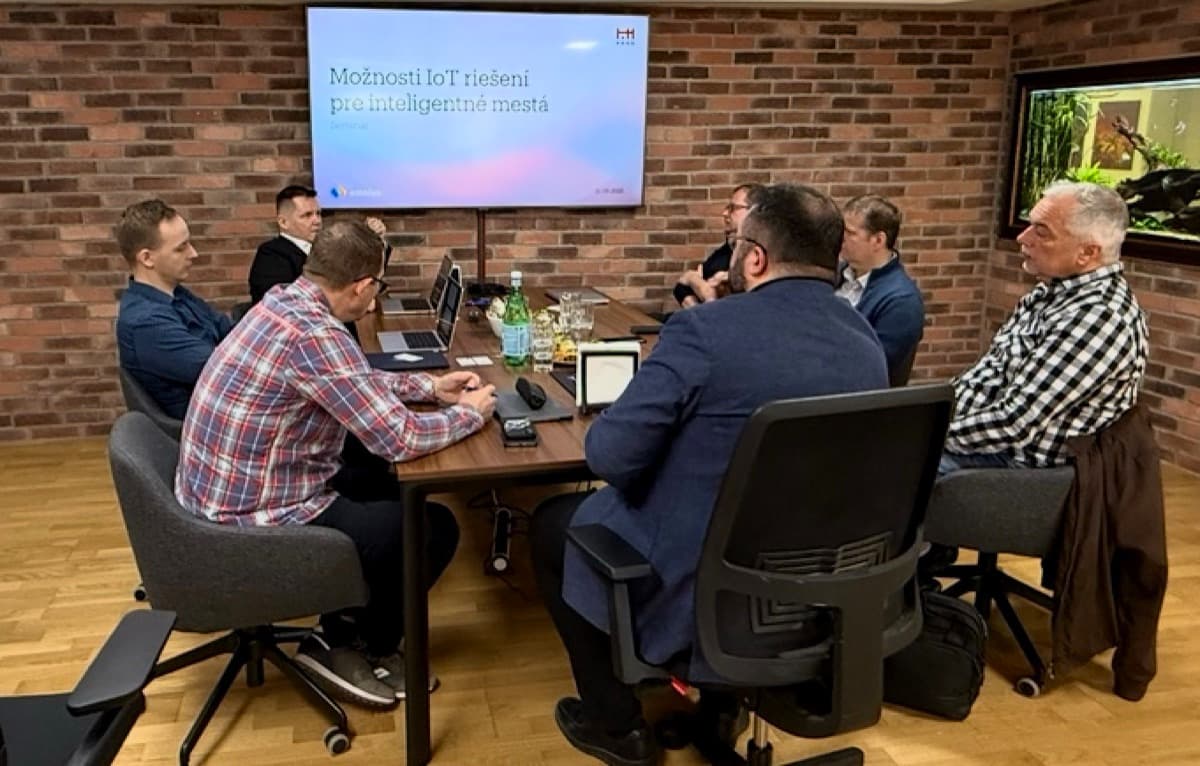
On March 11, 2025, a research seminar was held focused on possibilities for using IoT solutions in smart cities, with the participation of representatives of Bratislava City Hall and the Bratislava Municipal Police. The seminar opened a discussion between experts in urban management, public safety and technological innovation.
The event focused on presenting both technological solutions and the scientific-research dimension of these solutions, which contribute to a more efficient functioning of the city.
Analytical cameras and data for strategic decision making
The main topic was the use of analytical cameras and the data they generate. Participants discussed how to analyse, interpret and use this data for qualified decision making by local government.
From a research angle, questions arose about linking this data with other sources of information to create a comprehensive picture of what's happening in the city, from traffic flows through safety incidents to monitoring of public spaces.
IoT sensors and their potential
The discussion focused on the deployment of IoT sensors in the urban environment: sensors for monitoring the environment, parking, the condition of public spaces and traffic.
The scientific aspect lies in modelling city behaviour based on data from IoT sensors, which allows municipalities to build predictive models for urban planning.
Citizen awareness and trust building
Participants discussed ways to strengthen citizen awareness through modern technologies as a tool for increasing transparency and public engagement.
From a research perspective, the question was how to effectively communicate complex data to citizens in order to support trust in decisions made by local government.
Prospects and open questions
The seminar opened up space for discussion about the further development of smart solutions, with attention given to the research challenges of data source integration, personal data protection and cybersecurity.
Participants asked themselves how to set up cooperation between scientific institutions, local government and technology partners for the practical application of research in the urban environment.
Conclusion
The seminar confirms that close cooperation between the research sphere and local government is essential for the development of a smart city. This cooperation makes it possible to design solutions that reflect the needs of the city and its inhabitants, based on scientifically grounded data.
At omnius we work on such solutions every day, more in Public sector solutions and the KALM:IT platform.
Looking for a technology partner for a smart city project? Let's arrange a meeting.
Jozef Krivaček
CEO, omnius