Speed Cameras and Objective Liability (Part 2: Hardware)
Part one showed the software that turns the objective-liability agenda into an almost hands-off service. Now we look at the other side: what actually stands by the road. The radar, the ANPR camera, certification, connectivity and power that works even where there is no electricity.
Jozef Krivaček · 14/06/2026 · 7 min read
From software to what stands by the road
In part one we looked at the software, KALM:IT eRadar, which turns a legislative obligation into an almost hands-off service. But software is only half the story. To have anything to process, something has to stand by the road and reliably measure, photograph and send data. That is exactly what this part is about.
One important thing up front, so we understand each other: a municipality today still cannot measure speed with its own radar and issue fines on that basis. In Slovakia, speed enforcement via stationary radars is currently done by the state through the police; the option for municipalities to do it too has long been in preparation (and was even partly deferred in the latest amendment). Until that happens, the hardware can already deliver value to towns, on offences that don't require measuring speed (more on that below). That is why we build the devices to handle both: the agenda that works today, and speed the moment legislation opens it up for municipalities.
A radar is not just a radar. It is a camera that both sees and measures
When people hear "radar", most picture a box that flashes a number. In reality it is an integrated device that combines two things:
- an ANPR camera (Automatic Number Plate Recognition), which reads the vehicle's licence plate from the image and captures an evidentiary frame,
- a radar sensor, which measures the speed of the passing vehicle.
Both parts work as a single unit. The camera sees, the radar measures, and the control electronics in the device pair both inputs into a single record of one specific vehicle at one specific moment.
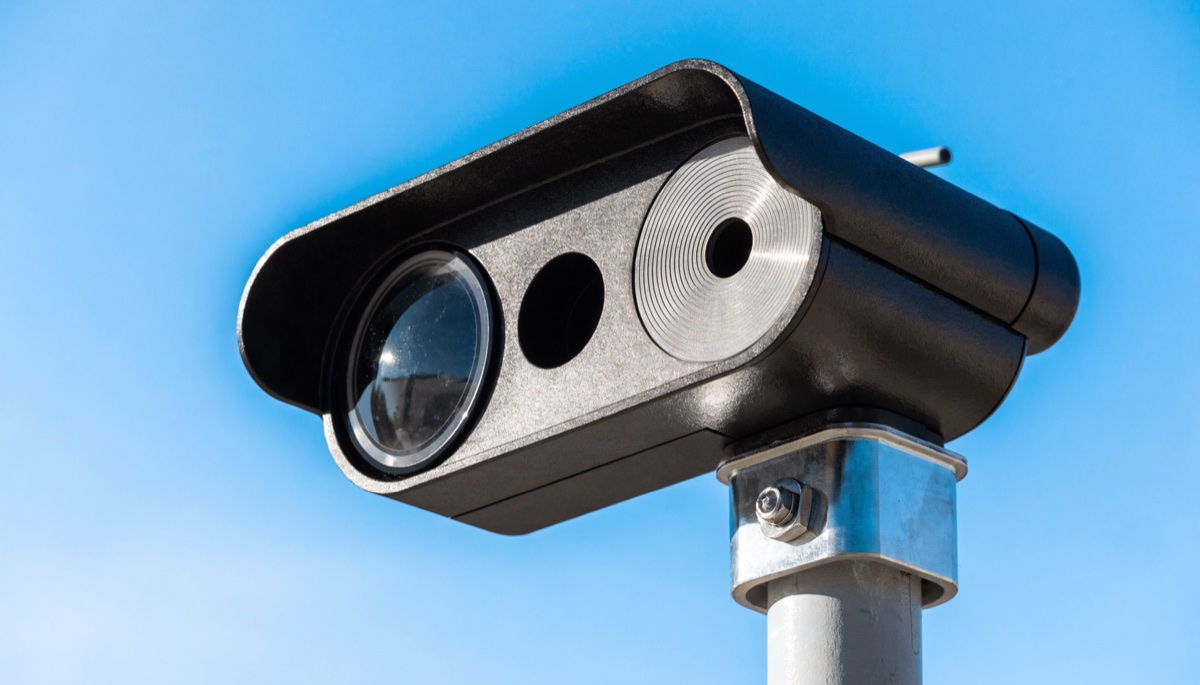 An ANPR camera combined with a radar sensor in one rugged housing, the core of a stationary meter.
Where it is mounted: on what already stands by the road
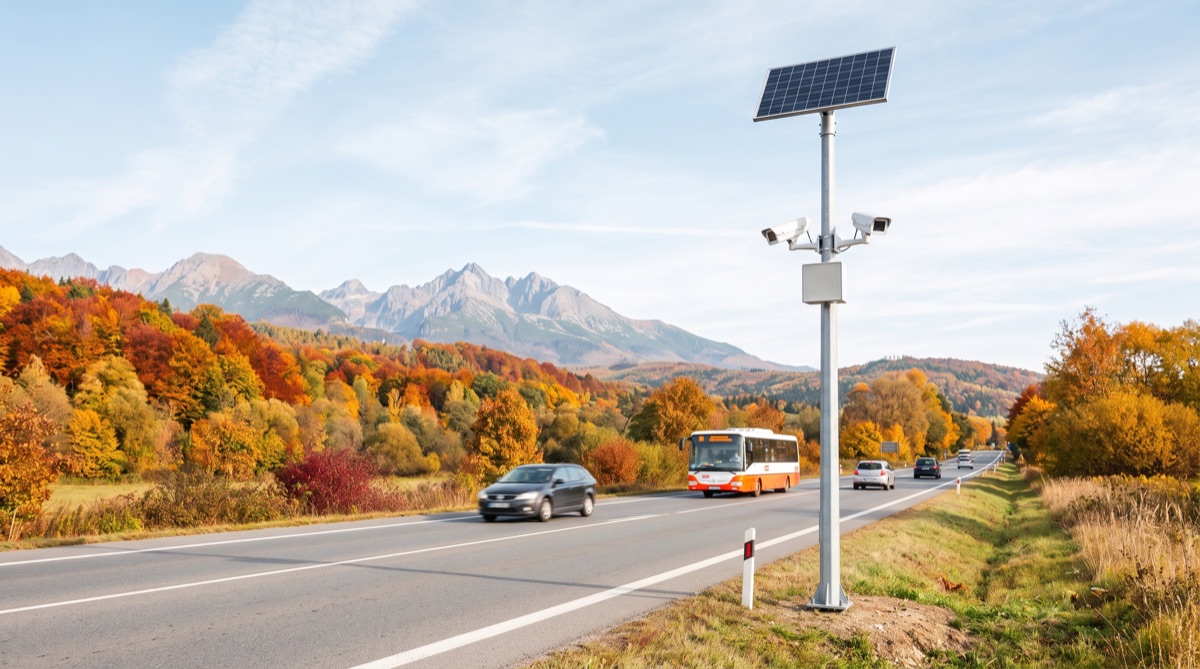
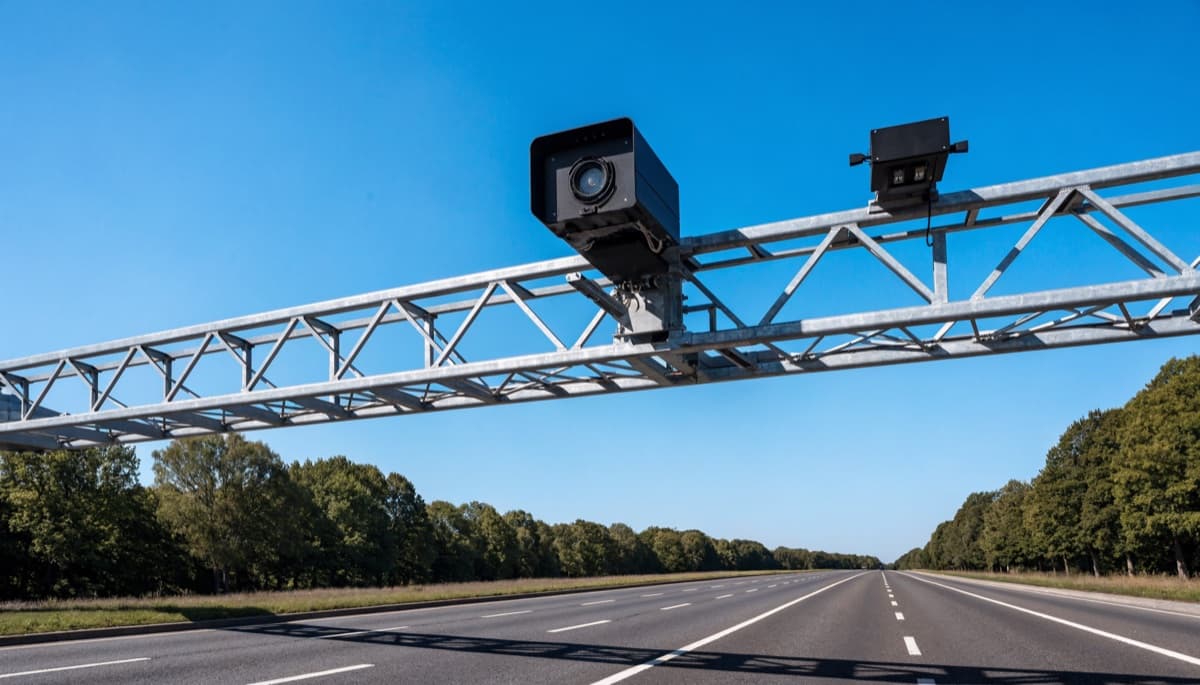
The device needs no construction of its own. It mounts on existing or new technology nodes, on street-lighting poles, standalone masts or road gantries above the lanes. Where a city already has a suitable point, deployment costs drop significantly; where it does not, we supply the supporting structure too.
The advantage of this approach is that the infrastructure grows gradually. One node today by a school, another in six months at a risky junction. Each point is independent and is added without having to dig up half the town.
It does not work without certification
For a record to have evidentiary value, "any" radar will not do. A speed meter is, under the metrology act (Act No. 157/2018 Coll.), a legally controlled measuring instrument. It may only be used with an approved instrument type and valid verification; without those, its reading would not hold up in administrative proceedings. This is precisely why deploying radar speed measurement for municipalities is, for now, more a question of legislation and metrology than of technology, until the whole chain from measurement to evidence is clear and verified, there is no point in issuing fines on its basis.
That is why we work with certified devices and build the entire evidentiary chain to be auditable, from the sensor all the way to the decision.
What the radar actually sends
By the road, the full video is not processed, no network or archive could handle that. The device sends metadata and an evidentiary frame:
- the measured speed of the vehicle,
- the licence plate read by the ANPR camera,
- the type and category of the vehicle (car, truck, bus),
- the time, location, direction of travel and the ID of the measuring point,
- the evidentiary photo with the violation marked.
This data travels to KALM:IT eRadar. The software compares the measured speed with the limit on that stretch and decides whether there is a violation at all. If there is, it assembles a complete evidence file, image and metadata, and passes it on for further processing. If not, the case goes no further. So only what genuinely needs handling remains.
Connectivity: 5G, Starlink, fibre, whatever is at hand
The data has to get from the road into the system, reliably. The device is therefore not tied to a single type of connection. It uses whatever is available and most stable at the location:
- fibre, if the node is connected to a fixed network,
- 5G / mobile at ordinary locations,
- satellite (Starlink) where neither fixed nor mobile networks reach.
For a municipality this means one thing: a measuring point can be placed even where "there is no internet", because we bring the connection with us.
It works even where there is no electricity
The same principle applies to power. The device has backup power, so a short outage will not bring it down. And where there is no electricity at all, we add a solar panel with a battery, so it runs fully independently, off-grid.
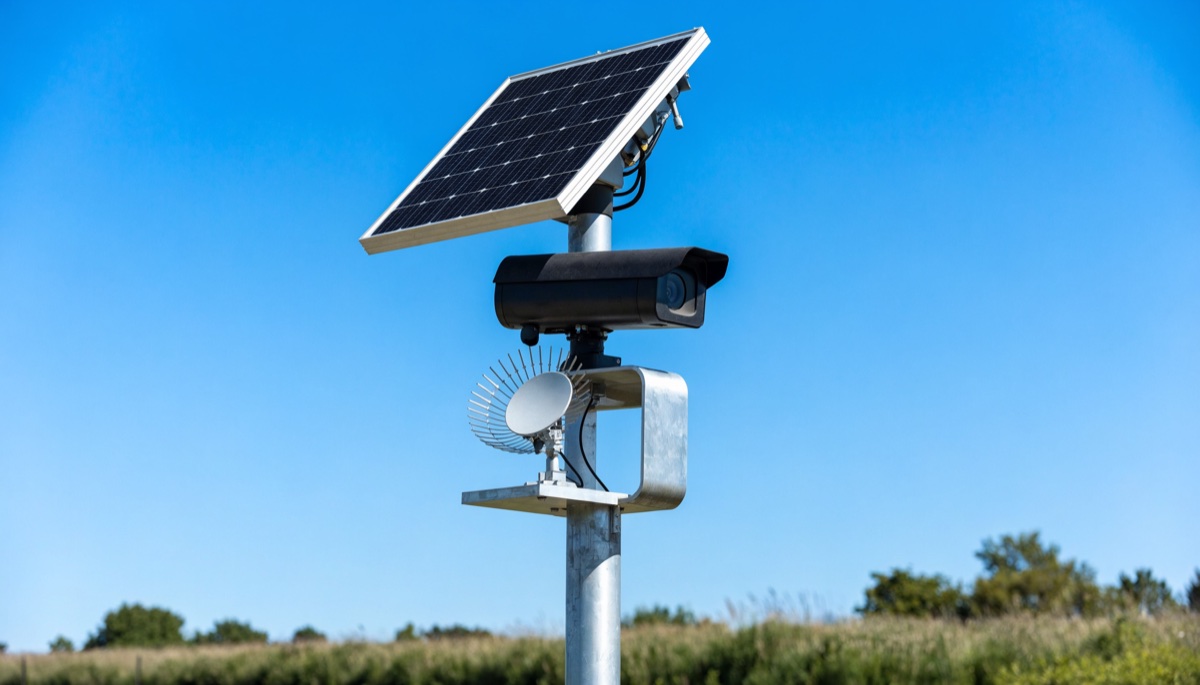 A measuring node with a solar panel and its own connectivity, fully independent of fixed power and network.
This philosophy, "I bring my own power and network with me", is one we also know from our mobile station TechTower. With stationary meters the result is the same: you choose the location by where it makes sense to measure, not by where a cable happens to end.
And what can be handled today, even without measuring speed?
Here is the good news for municipalities. Objective liability (Act No. 8/2009 Coll. on road traffic, §6a) is not only about speed. The catalogue of offences for which the vehicle keeper is liable is much broader, and municipalities already operate in it today, in practice chiefly with stopping and parking:
- breaking a no-stopping or no-standing restriction,
- illegal and unauthorised parking (including disabled bays).
The catalogue also includes other offences that do not require measuring speed and where the image, plate and time are enough as evidence, for example entering a no-entry zone, an illegal turn or U-turn, or running a red light combined with a traffic-light unit. In practice the municipal and local police handle these to the extent that they have suitable technology and powers for them, and those are gradually expanding with the upcoming changes.
For all of these offences the evidence is a record of the vehicle in a place and at a time where it was not allowed to stop or pass, and the ANPR camera produces that without trouble. The fine then goes to the vehicle keeper in order proceedings, much as we described in part one for the software. A municipality can therefore deploy the same hardware and the same software today, start with parking and restrictions, and speed measurement is added to it the moment legislation opens it up for towns. The investment in the node is not lost, the agenda it can cover simply expands.
The hardware is deliberately built "to grow into": a certified sensor, an ANPR camera, its own connectivity and power. Cities therefore do not have to wait for speed to start tackling what troubles them most today around schools and in the centre, stopping and parking where there should be none.
What comes next
In this part we covered what stands by the road and why it is built exactly this way. In the next instalment we will return to the topic we promised at the start of the series, the economic model: how the whole system can be not only cost-neutral for a municipality, but actually beneficial for the budget.
If you don't want to wait and would like to know what a certified node would look like specifically in your town, write to us directly. We will go through the locations, connectivity and what can be deployed right away and what waits for speed.
Jozef Krivaček
CEO, omnius