AI in a small or medium business means automations take over repetitive work around phone calls, emails, receipts and tasks, so people can focus on clients. You don't need an IT department or a big budget. At omnius we first deployed these solutions in our own 20-person company, and today we roll them out for other companies too. Our case study shows how it works for us.
We are not trainers, we are a long-term partner
Many companies start with an AI training course. Afterwards people know what AI can do, but nothing changes in the company, because nobody has time to design, connect and maintain the automations. We can run a training, but it is not our main work. We guide the company through the whole journey: from a pilot automation, through deployment into live operation, to looking after it and developing it further. We don't want to be a one-off delivery; we want to be your long-term partner.
We don't just hand over a tool. We take care of it for you.
Who it's for
- Companies with 10 to 200 employees, where the owner or management can't keep track of everything that is going on
- Service and installation companies with people in the field, where requests and receipts get lost between the phone and the office
- Sales and B2B companies that live on fast responses to enquiries
- Offices and consultancies, where email and admin take up a lot of time
What we deploy
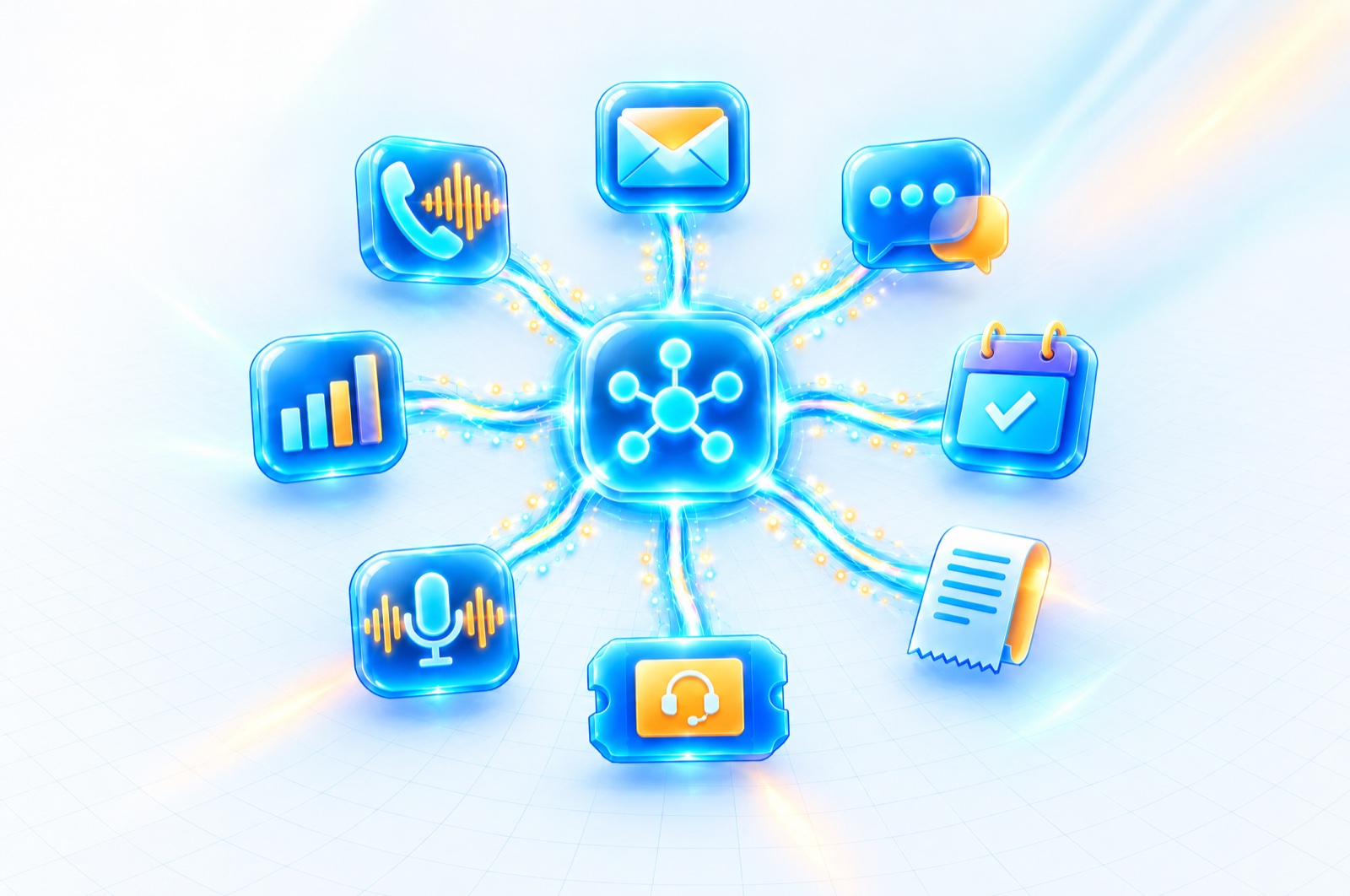
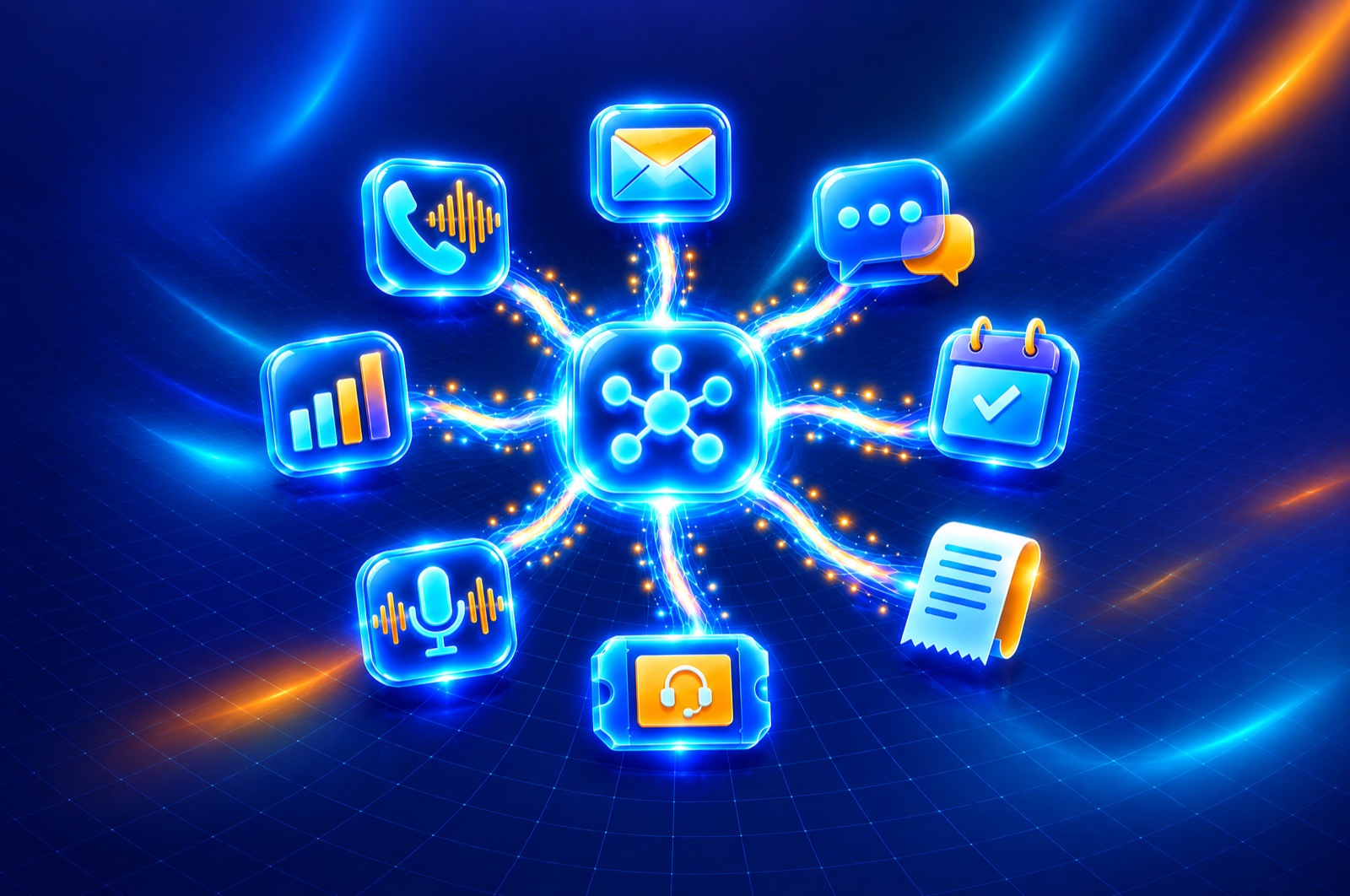
- AI phone system. A virtual phone system with no hardware that routes calls to the right people and, with the caller's consent, transcribes them. A missed call no longer means a lost request.
- Email requests as tickets. Every request is automatically logged in omniHub, assigned to an owner, and visible to the whole company.
- Digests and reminders. Daily, weekly and monthly overviews of company communication, plus reminders of commitments. The digest also flags any ticket nobody picked up in time.
- Receipt processing. Just take a photo of a receipt or invoice and send it; AI extracts the data into your records. More in The receipt and invoice tamer.
- Meeting transcripts in your CRM. The record of a meeting is saved with the client and project it belongs to.
- A CRM with AI agents that you own. omniHub has no per-user fees, and the source code is yours.
- AI with data in the EU. If data must not leave the European Union, we deploy language models through SovereignAI.
What it saves
The room for savings is large. Email takes up about 28% of employees' working time, more than 2 hours a day, and searching for and gathering information nearly another 2 hours a day (McKinsey). For searching alone, IDC reports up to 2.5 hours a day. McKinsey also estimates that today's AI can automate work activities that absorb 60 to 70% of employees' time. This is exactly the work we automate: email, requests, searching and retyping.
We calculate savings simply: time saved multiplied by the full cost of employment including employer contributions (gross salary × 1.362). With 21 working days a month and 231 days a year after holidays, 2 hours a day for one person works out like this:
| Example | Gross salary | Cost per hour | Per month | Per year |
|---|---|---|---|---|
| Employee on the Slovak average wage | €1,611 | €13 | €549 | €6,034 |
| Manager | €3,000 | €24 | €1,022 | €11,236 |
If automation saves 2 hours a day for ten people on the average wage, that is roughly €60,000 a year.
At omnius, with 20 people, automations save an hour a day for four people in management, worth roughly €41,000 a year at market salaries. We prepare the calculation for your company after an initial consultation.
How we work together
- A short consultation. We go through where your people lose the most time and prepare a savings calculation.
- Pilot. We deploy the first automation with the biggest payoff on a smaller scale and evaluate together how much it really saves.
- Deployment into operation. We connect it to the tools you already use, such as email, Slack or accounting software. If needed, we train your people too.
- Long-term care and development. We service what we deploy, handle changes, and add further automations based on the results.
What's coming
What we test in our own company becomes available to clients too. We are preparing AI that will talk to callers, and ticket triage, where AI assigns every new ticket a priority level and sends it to the right person.